Lawmakers in Washington are contemplating an artificial intelligence provision that could have wide ranging ramifications for how states and localities regulate the emerging technology and protect the vulnerable online.
The provision could be added to the National Defense Authorization Act that will direct how nearly $1 trillion will be spent on national defense for Fiscal Year 2026, The NDAA text is expected to be released this Thursday. While the precise language of the AI provision remains unknown, it could likely entail efforts to prevent states or localities from regulating AI and possibly even render many state laws to protect children moot.
According to a report from Axios, Senate Commerce Committee Chairman Ted Cruz, R-Texas, and House Majority Leader Steve Scalise, R-La., have shopped language around Capitol Hill that would preempt or override state-level AI regulations. Some of the bills that would come to regulate AI on the federal level would likely pass through Cruz’s Senate committee as the Texas senator eyes another White House bid in 2028.
The White House has supported efforts by Congress to get such AI provisions into law.
If Congress does decide to slip the AI provision into the NDAA, it would be the second time this year Congress has tried to add an AI provision of this nature to a large legislative item.
The Senate debated adding a 10-year AI regulation moratorium for states in the One Big Beautiful Bill that was signed into law in July. That AI provision mulled by the Senate would have withheld federal broadband funding to states if sought to enforce the laws passed by the duly elected representatives of their American citizens. Furthermore, federal broadband funds would have also been withheld if states and localities dared to address new concerns about AI for the 10 years following the enactment of the provisions. Cruz was a proponent of placing the AI provision in the reconciliation package signed by President Donald Trump in July.
Proponents of the previously debated AI provision expressed concerns that America’s patchwork of AI regulations would hinder American technology companies’ abilities to compete with China and other rivals of the U.S. The provision as written would therefore have affected red and blue states alike including the technology hubs of Texas and California. It was ultimately removed in the final version of the budget bill by a vote of 99 to 1 in the Senate.
Some Republicans in Congress, however, are throwing cold water on putting an AI provision into the NDAA.
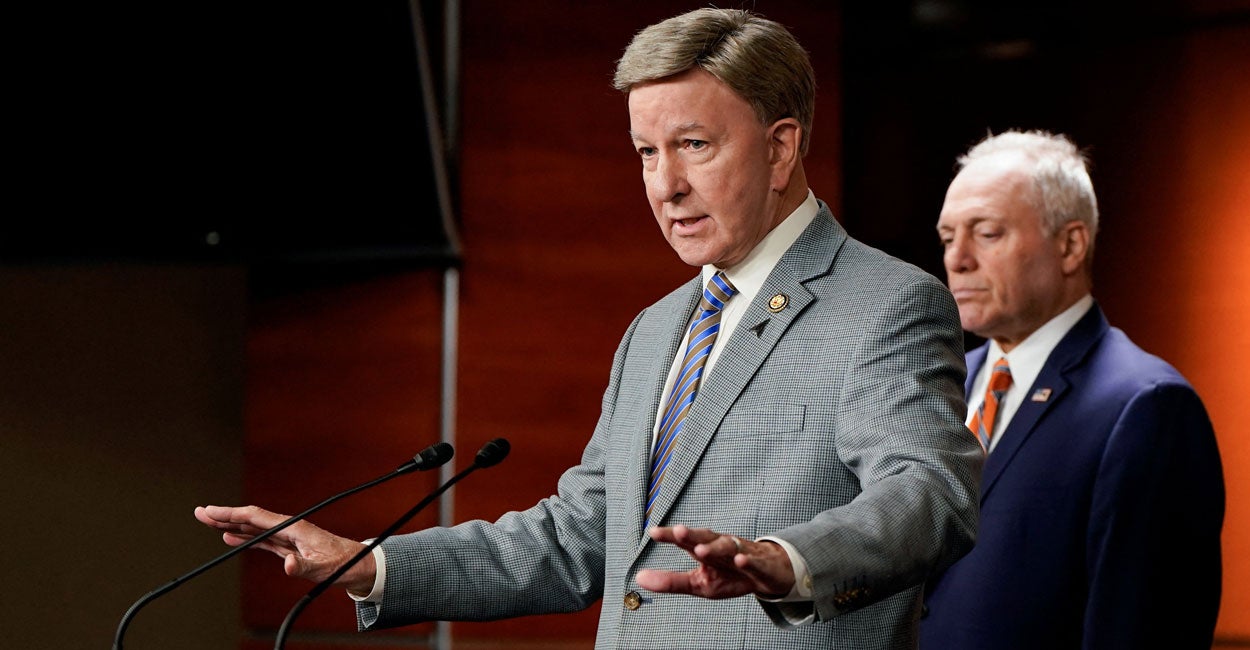
House Armed Services Chairman Mike Rogers, R-Ala., has reportedly said he does not think a moratorium on individual state regulation of AI will be included in the final version of the NDAA.
“From what I hear, it’s kind of lost its momentum. It doesn’t have enough support,” Rogers said according to Politico.
As The Daily Signal previously reported, Texas has already passed legislation regulating the utilization of AI in censoring viewpoints on the Internet as well as user privacy protections from AI-empowered data harvesting, allowing Americans to opt-out of being profiled. Such laws are widely supported by the chief law enforcement officers of dozens of states as demonstrated by a National Association of Attorneys General letter to congressional leadership in May that came out against the 10-year moratorium.
The letter noted the absence of federal action addressing the potential harms of AI, which has required states to step up and protect their residents themselves by passing laws.
“These include laws designed to protect against AI-generated explicit material, prohibit deep-fakes designed to mislead voters and consumers, protect renters when algorithms are used to set rent, prevent spam phone calls and texts, require basic disclosures when consumers are interacting with specific kinds of AI, and ensure identity protection for endorsements and other AI-generated content,” the attorneys general letter explained.
The moratorium was also opposed by one of the most prominent Republican state executives in the country, Arkansas Gov. Sarah Sanders.
“Congressional Republicans like Sen. [Marsha] Blackburn, Sen. [Josh] Hawley, and members of the House Freedom Caucus are right: The One, Big, Beautiful Bill will be a huge win for the American people, but can’t include a provision that strips states of their right to regulate AI,” Sanders said to The Daily Signal in June about the moratorium.
When asked about the return of the potential regulatory ban, Sanders’s office told The Daily Signal that, “Governor Sanders supports President Trump’s leadership to unleash American AI dominance and looks forward to working with his administration and other stakeholders to make sure we win the race against China and also protect Americans.”