
President Donald Trump’s Justice Department is continuing to conceal details of payments the government made to Twitter amid its push to censor “misinformation” online.
Judge James Boasberg, an Obama appointee, agreed that the Department of Justice (DOJ) can withhold the FBI’s quarterly payments to Twitter for “legal-process requests” between 2016 to 2023 in a Feb. 4 opinion.
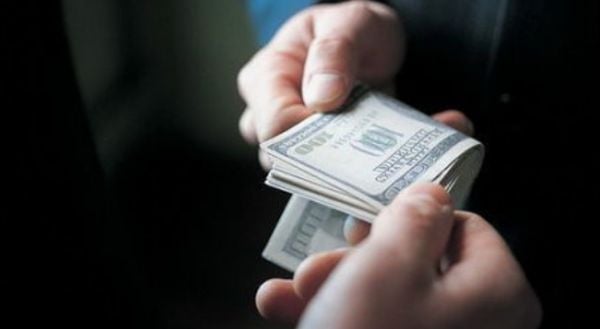
The FBI paid Twitter nearly $3.5 million between October 2019 and February 2021, an email in the “Twitter Files” reported by journalist Michael Shellenberger revealed. The exact purpose of the payment, which took place during peak government pressure on platforms to patrol content about COVID-19, remains unclear.
Judicial Watch sued in October 2023 to obtain records of any payments after the FBI “failed to respond adequately” to their initial Freedom of Information Act (FOIA) request seeking details about the payments in December 2022.
“These records were created as part of serving subpoenas, warrants, and other requests on Twitter to retrieve information that would help the FBI investigate crimes and national-security threats,” Boasberg wrote in his Feb. 4 opinion. “The investigatory activities that gave rise to the documents were thus related to enforcing federal laws and maintaining national security, and there was a rational relationship between those investigations and the Bureau’s law-enforcement duties.”
While Twitter already releases semi-annual reports showing how many “legal process requests” it received and complied with, making quarterly payments for FBI-specific requests public could add detail that reveals “how, when, and under which circumstances certain techniques are employed by law enforcement and investigative agencies,” Boasberg wrote.
Internal documents released in the Twitter Files revealed in 2023 how government officials flagged posts deemed COVID-19 “misinformation” for the company to take down.
Twitter suppressed the Hunter Biden laptop story after the FBI’s warning about a potential Russian “hack-and-leak” operation to influence the 2020 election, emails reported by Matt Taibbi in December 2022 showed. The FBI also flagged specific posts for removal ahead of the election, emails revealed.
The Daily Caller News Foundation verified an email from the laptop in 2020.
“As we explain in our brief, disclosing the amount of money that the FBI pays to a social media company would provide insights into the FBI’s engagement with that company,” Timothy Lauer, spokesperson for the District of Columbia U.S. Attorney’s Office, said in a statement to the DCNF.
“Bad actors (which could include the common criminal as well as a foreign adversary) could use this information to determine which social media platform they should use to avoid FBI detection or determine whether the FBI has detected their activity,” he said. “This is the type of information that law enforcement agencies routinely withhold under Exemption 7(E).”
So @JudicialWatch sued to find out how much the Deep State/Biden FBI was paying Twitter (now @X) to censor and spy on Americans. Kash Patel’s FBI and Pam Bondi’s Justice Department told a federal court we shouldn’t get even summary quarterly totals of the payments because it… https://t.co/6P6oqQDxDj
— Tom Fitton (@TomFitton) February 18, 2026
Judicial Watch President Tom Fitton told the DCNF that the DOJ should have released the information “given what we know about the FBI’s improper, corrupt and dangerous relationship with Twitter in terms of censorship and the spying on Trump.”
“They may not tell us exactly what they were doing, but how much money was being spent in the process, to me, to us, is a public interest,” he said. “We’re fighting the Trump Justice Department and the Trump FBI for records that could provide some insight into the abuse of Trump.”
The FBI obtained four Foreign Intelligence Surveillance Act (FISA) warrants in 2016 and 2017 to surveil Trump campaign aide Carter Page, though the DOJ later admitted in 2020 that two lacked probable cause. The FBI “fell far short of the requirement” that all statements in a FISA application are “scrupulously accurate,” a DOJ Office of the Inspector General report found.
An agency official told Fox News in December 2022 that the payment to Twitter was a reimbursement for “reasonable costs and expenses associated with their response to a legal process … for complying with legal requests, and a standard procedure.”
The government argued in a December 2025 filing that “releasing the amounts of money that the FBI paid to Twitter on a quarterly basis will, combined with other publicly available information, provide insights into the FBI’s investigative activities that bad actors would use to evade FBI detection.”
“Releasing the amount of money paid to Twitter would show how the FBI’s engagement with Twitter has increased or decreased over time,” the government wrote.
In a July 2025 filing, the DOJ wrote that it already “released all non-exempt reasonably segregable portions of responsive records.”
The opposition to releasing the payment details is the latest decision to spark tension between conservative organizations and the DOJ.
The DOJ’s handling of the Epstein files caused months of frustration after Attorney General Pam Bondi claimed she had a “client list” on her desk in February 2025 and influencers were given binders containing little new information.
Congress passed a bill in November compelling the documents’ release, prompting the DOJ to release m0ore files in December and February.
Judicial Watch has faced resistance from the Trump administration in a number of other efforts to obtain records via FOIA, Fitton said. The organization sued in December for FBI records related to Hunter Biden’s laptop.
“We’re asking about issues that are important to the American people,” Fitton said. “And you know, transparency about the worst corruption in American history. I mean, that ought to be at the top of their list.”
Content created by The Daily Caller News Foundation is available without charge to any eligible news publisher that can provide a large audience. For licensing opportunities of our original content, please contact [email protected].