
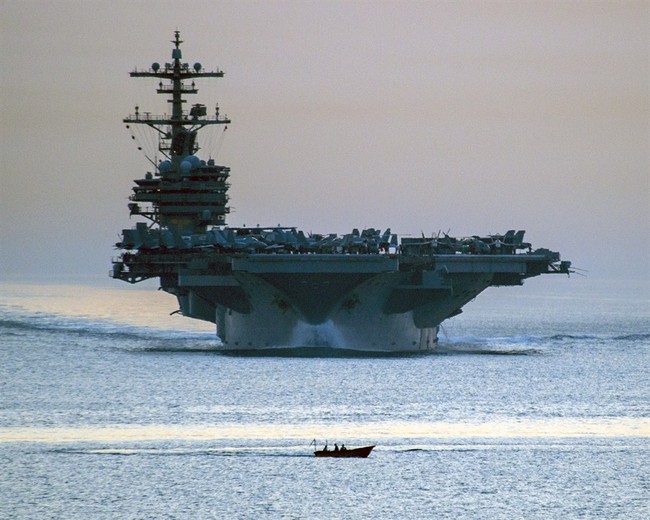
It’s hard to know who exactly is making the decisions in Iran these days, since Operation Epic Fury wiped out almost their entire leadership group. Nonetheless, they’re still managing to shoot missiles at neighboring countries and disrupt the crucial shipping route, the Strait of Hormuz.
Twenty percent of the world’s oil goes through its narrow waterways, which comprise the embattled republic’s entire southern border.
As RedState’s Ward Clark reported Saturday, they’re continuing their long history of saber-rattling and threatening to shut the whole thing down. They’ve already begun their efforts to rattle the world’s economy, using not just explosives but electronic attacks too, which have hit over a thousand vessels:
One vessel west of Sharjah, UAE, was rocked by an explosion from an unknown projectile that detonated close alongside, and another tanker north of Muscat, Oman, was struck above the waterline, sparking a fire that was later brought under control, according to data.
A third vessel northwest of Mina Saqr, UAE, was also hit by a projectile that ignited a blaze aboard, the organization reported.
Compounding the physical threats is a surge in electronic warfare with maritime intelligence firm Windward reporting widespread GPS and Automatic Identification System (AIS) interference, impacting 1,000-plus ships.
MORE: Report: U.K. Royal Navy Trade Org Says Iran Is Threatening to Close Strait of Hormuz
New: Nine Iranian Navy Ships Now on the Bottom of the Ocean
It’s already affecting shipping traffic in the region:
Windward cited widespread navigation disruption near Iran’s Bandar Abbas port, with ships falsely appearing at airports, a nuclear power plant and inland locations.
Several new AIS jamming clusters were also identified across Emirati, Qatari, Omani and Iranian waters, Windward said.
Major shipping company Maersk announced it would reroute some services away from the region, citing crew and cargo safety.
Their antics could have serious effects on the world’s oil market, according to analysts.
Oil Futures have surged more than 7%, climbing above 72 USD per barrel. The main reason is that oil tanker traffic through the Strait of Hormuz has nearly come to a halt, as shipping companies are concerned about security risks.
This is the most critical chokepoint in global oil… pic.twitter.com/i92ci4paRw
— ThuanCapitalGlobal (@ThuanGlobal) March 1, 2026
This is the most critical chokepoint in global oil trade, with around 14 to 14.5 million barrels per day passing through in 2025, equivalent to nearly one third of the world’s seaborne oil exports. Of that volume, about 90% flows to Asia, 4% to the Americas, 4% to Europe, and 2% to Africa.
Meanwhile, the Yemeni terror group the Houthis is once again threatening to attack shipping, complicating matters.
There are a lot of panicans on social media Sunday, saying things like Trump is trying to collapse the world economy or that he’s nothing more than Israeli PM Benjamin Netanyahu’s puppet.
Missing in their analyses is that it’s going to be hard for Iranians to keep attacking if they’re dead.
I suspect the Trump administration was well aware that this would be likely to take place and presumably has a plan to deal with it. In the short term, prices are likely to be frenetic, and there will be some shipping disruption.
However, that’s preferable to getting by an Iranian nuclear bomb.
This article has been updated to clarify that the Houthis are a Yemeni terrorist group.
Editor’s Note: Thanks to President Trump and Defense Secretary Pete Hegseth’s leadership, the warrior ethos is coming back to America’s military.
Help us report on Trump and Hegesth’s successes as they make our military great again. Join RedState VIP and use promo code FIGHT to get 60% off your membership.