There was plenty of outrage yesterday after President Donald Trump took to Truth Social and posted the following reaction to the death of former FBI Director Robert Mueller:
“Robert Mueller just died. Good, I’m glad he’s dead. He can no longer hurt innocent people!”
Predictably, the response was swift and condemning. Critics called the statement inappropriate, unpresidential, and beneath the dignity of the office. Commentators insisted that, whatever one’s views of Mueller’s role in the Russia investigation, there is a long-standing norm in American public life: you don’t speak ill of the dead—at least not on the day they die. For many in Washington and the media, that rule isn’t just etiquette—it’s treated as a moral line that simply shouldn’t be crossed.
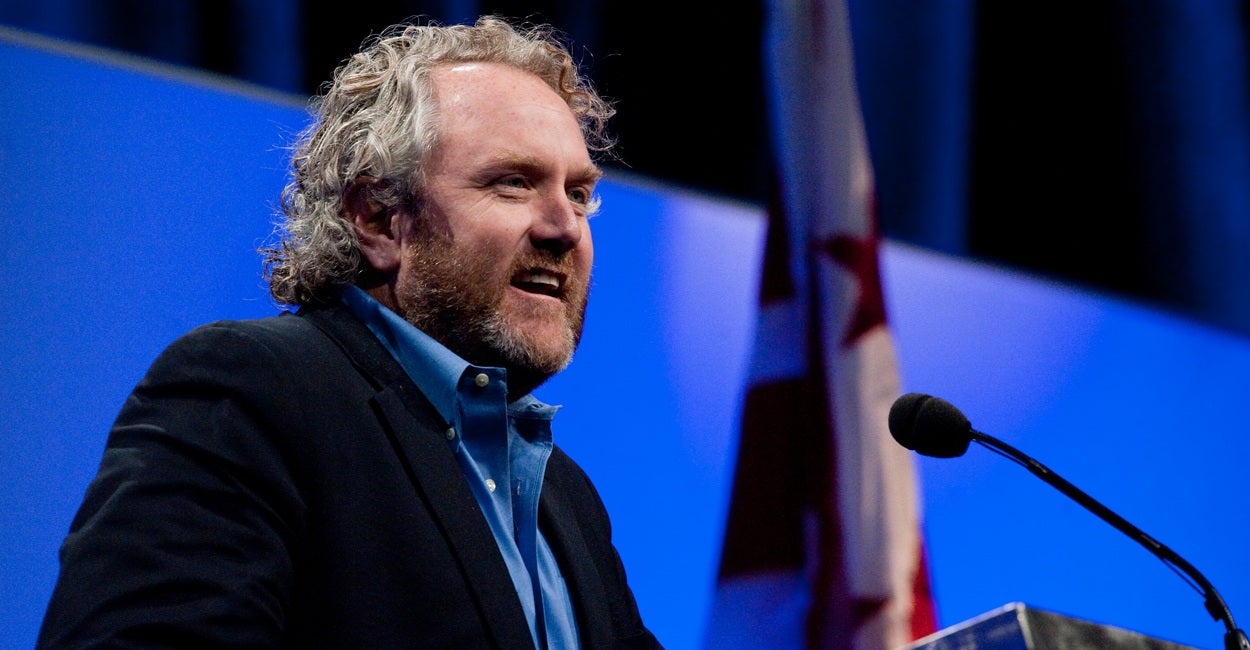
That reaction may feel familiar to me, because I’ve seen this movie before—up close and in real time, sitting with Andrew Breitbart the evening Ted Kennedy died.
For context, Mueller wasn’t just another Washington figure to Trump. As special counsel, he led a nearly two-year investigation into Trump, his campaign, and those around him that expanded beyond Russian interference to include obstruction and the conduct of his associates.
The probe produced charges against multiple figures in Trump’s orbit and dominated his first presidency, fueling relentless media coverage and political pressure. Even though Mueller did not establish a criminal conspiracy between the Trump campaign and Russia, the investigation left a lasting mark on how Trump views him.
More than 15 years ago, on the evening Sen. Kennedy passed away, I was sitting with my friend Andrew Breitbart in the basement office of his West Los Angeles home, overlooking the peaceful Los Angeles National Cemetery in Westwood.
The news broke, and Andrew immediately had a very different reaction from what you were seeing on television. He wasn’t thinking about tributes or carefully worded statements—he was thinking about what was about to happen next.
He wasn’t celebrating Kennedy’s death, and that’s an important distinction that gets lost in moments like this. There was no sense of joy, no “good riddance,” no satisfaction that a political opponent was gone. What there was, instead, was urgency—and a clear understanding of how quickly a public narrative can be locked in.
Neither Andrew nor I were happy that a U.S. Senator had died, just as I’m not sitting here celebrating the death of a former FBI Director. But there’s another reality that’s hard to ignore—neither of us had ever had the full power of the federal government—and the FBI—trained on us the way Trump did. That doesn’t justify it. But it does explain it.
Andrew believed—strongly—that Kennedy, a man he held in low esteem, was about to be canonized by the media and the political left. He believed Kennedy’s controversial record would be quickly smoothed over into a sanitized legacy. In his view, if you didn’t speak immediately, you were conceding the argument.
He pointed to the death of Mary Jo Kopechne at Chappaquiddick. He pointed to Kennedy’s iron grip on the Senate Judiciary Committee and the way conservative nominees were treated. And he talked about something more personal—something that had shaped his own path into politics.
I remember him saying it plainly: “Jon, this jerk is the reason I got involved in politics in the first place.”
He was talking about the environment Sen. Kennedy helped create around Clarence Thomas during the 1991 hearings before his appointment to the Supreme Court. This was an environment where last-minute, unproven allegations from Anita Hill were treated as gospel and used to try to derail a Supreme Court nomination. For Andrew, it wasn’t just politics—it was a turning point, a moment where he believed the system was being used not to vet a nominee, but to destroy one.
Andrew’s view was simple: if you wait, the narrative is set. The day someone dies is the day their legacy is shaped, and if you believe that story is going to be incomplete or misleading, silence isn’t neutrality—it’s surrender.
So he acted. Andrew took to Twitter (now X) and unleashed, and I did as well. He, of course, had a much larger platform, and his posts quickly drew national attention for their bluntness and their refusal to follow the expected script.
In one widely cited reaction, he wrote that he was “more than willing to go off decorum to ensure THIS MAN is not beatified,” adding, “Sorry, he destroyed lives. And he knew it.” Politico captured the moment in a piece titled “Not all Kennedy critics hold fire,” noting that while most conservatives exercised restraint, Breitbart was willing to say what others would not.
By the end of the year, Politico included Breitbart’s tweets in its roundup of the top political tweets of 2009. One of those tweets read simply: “Rest in Chappaquiddick.”
Andrew wasn’t celebrating Kennedy’s death. But it raises the same question: what is the propriety of criticizing someone at the moment of their death?
The real question isn’t tone. When someone dies, are we expected to participate in a softened version of their legacy, or allowed to speak plainly about the record they leave behind? Is silence about respect—or about controlling the narrative when it matters most?
Andrew Breitbart understood that dynamic. Public memory is shaped in the immediate aftermath, when attention is highest and scrutiny is lowest. If you had something to say, you said it then.
I remember that night clearly. The reaction was immediate, the backlash came fast, and Andrew never flinched.
Then, later—after things had settled down, after the initial storm had passed—he paused, took a breath, and looked over at me.
“We did some good today. We said things that had to be said.”
He leaned back for a second, then added:
“I’m hungry. Should we order pizza?”
We publish a variety of perspectives. Nothing written here is to be construed as representing the views of The Daily Signal.