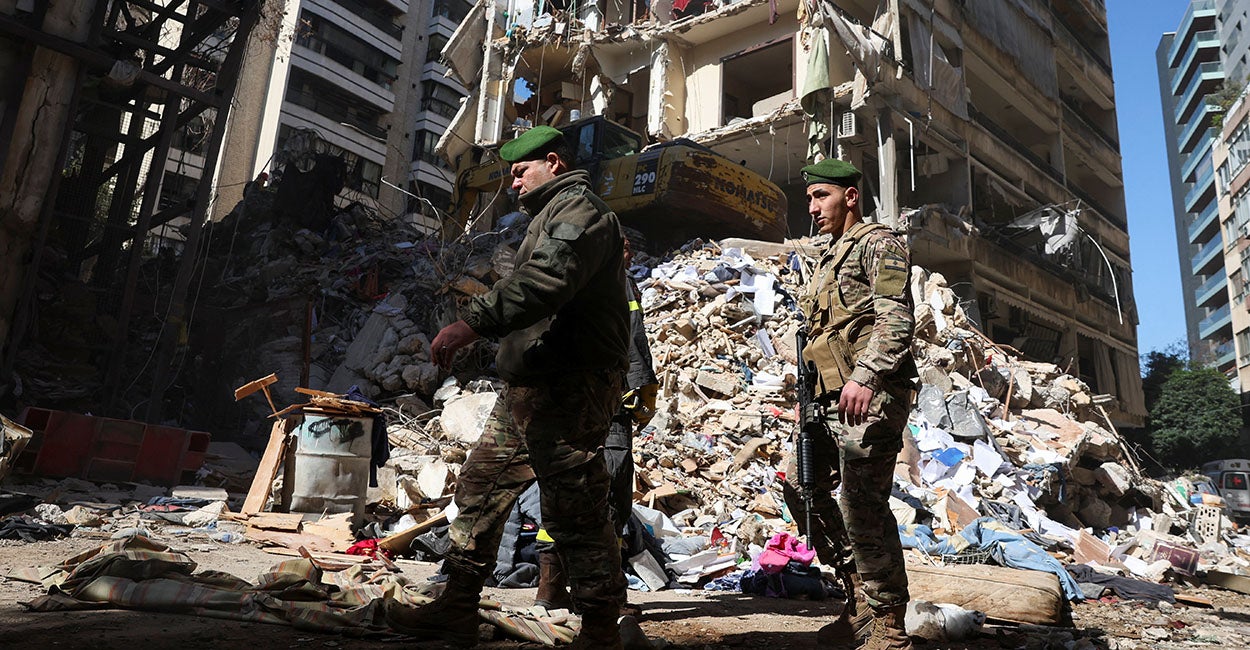
DUBAI/BEIRUT/ISLAMABAD, April 9 (Reuters) – Israeli Prime Minister Benjamin Netanyahu said on Thursday he is seeking direct talks with Beirut, a day after the worst bombardment of the war killed more than 250 people in Lebanon and placed the U.S.-Iran ceasefire in jeopardy.
President Donald Trump announced a ceasefire in the six-week-old Iran conflict late on Tuesday, just hours before a deadline after which he threatened to destroy Iran’s entire civilisation.
In Pakistan, authorities were preparing for the first round of U.S.-Iran talks, locking down the capital Islamabad.
But there was no sign Iran was lifting its near-total blockade of the Strait of Hormuz, which has caused the worst disruption to global energy supplies in history, with Israel’s ongoing attacks on Lebanon cited as a key sticking point.
In the first 24 hours of the ceasefire, just a single oil products tanker and five dry bulk carriers sailed through a strait that typically accommodated 140 ships a day before the war, accounting for around a fifth of the world’s oil and liquefied natural gas flows.
Netanyahu, whose government rebuffed a historic offer for direct talks with Lebanon last month, said in a statement that he had given instructions to start peace talks as soon as possible, which would also include disarming Iran-aligned militant group Hezbollah.
“In light of Lebanon’s repeated requests to open direct negotiations with Israel, I instructed the cabinet yesterday to start direct negotiations with Lebanon as soon as possible,” he said. “The negotiations will focus on disarming Hezbollah and establishing peaceful relations between Israel and Lebanon.”
An hour before Netanyahu’s statement, Lebanese President Joseph Aoun said he was working on a diplomatic track on this matter that was starting to be seen “positively” by international actors.
A senior Lebanese official told Reuters that Lebanon had spent the last day pushing for a temporary ceasefire to allow for broader talks with Israel, describing the effort as a “separate track but the same model” as the U.S.-Iran truce.
The official said no date or location had been set yet but that Lebanon needed the United States as a mediator and guarantor of any agreement.
ISRAEL SAYS CEASEFIRE DOES NOT COVER LEBANON
Israel, which invaded Lebanon last month in parallel with the war on Iran to root out Hezbollah, says its actions there are not covered by Trump’s ceasefire.
Washington has also said Lebanon is not covered by the truce, but Iran and Pakistan, which acted as mediator, say it was explicitly part of the deal. A host of countries, including Britain and France, said the truce should extend to Lebanon.
Iran’s Parliament Speaker Mohammad Baqer Qalibaf, expected to head the Iranian delegation opposite Vice President JD Vance, tweeted that Lebanon and the rest of Iran’s “axis” of regional allies were inseparable parts of any ceasefire.
A Pakistani source said Pakistan was working on ceasefires for Lebanon as well as Yemen, where Israel has also hit Iran-aligned forces.
ISRAEL SAYS IT KILLS HEZBOLLAH CHIEF’S NEPHEW
Israel kept up its bombing of Beirut’s southern suburbs and other parts of the country on Thursday, Lebanese state media said.
It also expanded evacuation orders for areas on Beirut’s outskirts to areas near Beirut airport and several displacement shelters.
Hezbollah announced at least 20 military operations on Thursday, saying it had targeted Israeli vehicles on Lebanese territory as well as firing into northern Israel.
Originally published by Reuters.