
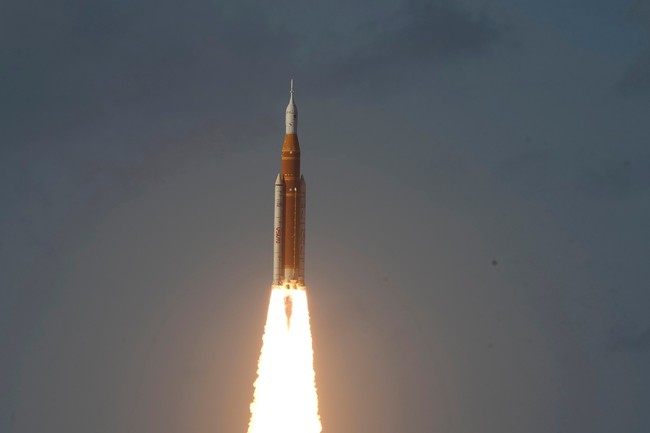
As a kid who saw the space shuttle flights, this is the moment that many Gen-X kids have been waiting for. NASA’s Artemis II mission has returned four astronauts safely to Earth after a successful trip around the moon, the first crewed lunar voyage in more than half a century. The flight marks real progress for the Artemis program, which aims to put Americans back on the lunar surface and lay groundwork for deeper space exploration.
Commander Reid Wiseman, pilot Victor Glover, mission specialist Christina Koch, and Canadian astronaut Jeremy Hansen completed the roughly 10-day journey aboard NASA’s Orion spacecraft. They splashed down in the Pacific Ocean on April 10, 2026, and were welcomed home in Houston the following day.
The mission tested Orion’s systems in deep space, gathered data on the spacecraft’s performance, and gave the crew a firsthand look at the moon’s far side and a record distance from Earth.
With Artemis II complete, we’re preparing to roll Artemis III into the VAB. Artemis III will rendezvous with our partners in earth orbit as we continue building toward the @NASAMoonBase.
Artemis missions will launch every year, with Artemis IV landing on the Moon in 2028. pic.twitter.com/SfscJkWzo5
— NASA Administrator Jared Isaacman (@NASAAdmin) April 13, 2026
This was no small achievement. Artemis II builds directly on lessons from the Apollo era while incorporating modern engineering and international cooperation. The crew included the first woman and first person of color to travel beyond low-Earth orbit, along with the first non-American. Their safe return demonstrates that NASA and its partners can manage the complex risks of human spaceflight when focus remains on execution rather than timelines or optics. The next steps matter more.
Artemis III is gearing up!
Beyond Earth. The journey begins here. pic.twitter.com/RXxmOsk1hR— Lunar Citizens (@LunarCitizens) April 13, 2026
Artemis III, planned for 2027, will test Orion’s docking with a commercial lunar lander in Earth orbit, much like Apollo 9 prepared the way for the first moon landing. Artemis IV targets an actual landing in the moon’s south polar region as early as 2028, where ice in shadowed craters could support a longer-term presence. Private companies SpaceX and Blue Origin are developing the landers, bringing competition and innovation that government programs alone rarely achieve at this pace.
This cadence is remarkable. Artemis II lands April 10, and Artemis III is already rolling into the VAB. Consecutive missions, actual lunar landing in 2028 — we’re watching the infrastructure of a permanent human return to the Moon being assembled in real time. The pace feels…
— RainbowRenegade (@RainbowRen47330) April 13, 2026
ALSO SEE: Yes! The Artemis II Splashdown Has Happened
The Artemis II Heroes Are Back Home, but the Mission Goes On. What’s Next?
We as a nation have long argued that space exploration succeeds best when it leverages American ingenuity, clear priorities, and fiscal discipline. The involvement of commercial partners reflects that principle. Relying on proven private-sector capabilities for landers and other elements can control costs and accelerate development compared with purely bureaucratic approaches. Past delays in the Artemis program underscore the need for steady leadership that demands results over endless studies. At the same time, the program’s ambitions deserve scrutiny.
Annual launches and a Moon base in sight? We’re not dreaming anymore—we’re scheduling.
— TheGrowthEngr (@TheGrowthEngr) April 13, 2026
Plans for a $20 billion to $30 billion moon base highlight the stakes. Taxpayers fund this work, so NASA must deliver tangible returns: scientific discovery, technological spin-offs that strengthen national security and economic competitiveness, and a clear path toward Mars. A permanent lunar foothold could serve strategic interests, from resource utilization to maintaining a technological edge against competitors like China, which is advancing its own lunar program.
The Artemis II crew spoke of Earth as a delicate oasis and expressed awe at what they saw. Those reflections remind us why exploration endures. It pushes human limits, fosters national pride, and reminds us of what free societies can accomplish when they set ambitious goals and back them with resolve. The real test lies ahead. With Artemis II complete, the focus must shift to on-time, on-budget execution for the missions that follow.
Success will depend on clear-eyed management that balances risk with determination, avoids unnecessary bureaucracy, and keeps the emphasis on American leadership in space. The astronauts have done their part. Now the program must match their courage with competence and accountability. Artemis II Success Sets Stage for Renewed American Leadership in Space
Editor’s Note: Do you enjoy RedState’s conservative reporting that takes on the radical left and woke media? Support our work so that we can continue to bring you the truth.
Join RedState VIP and use the promo code FIGHT to get 60% off your VIP membership!