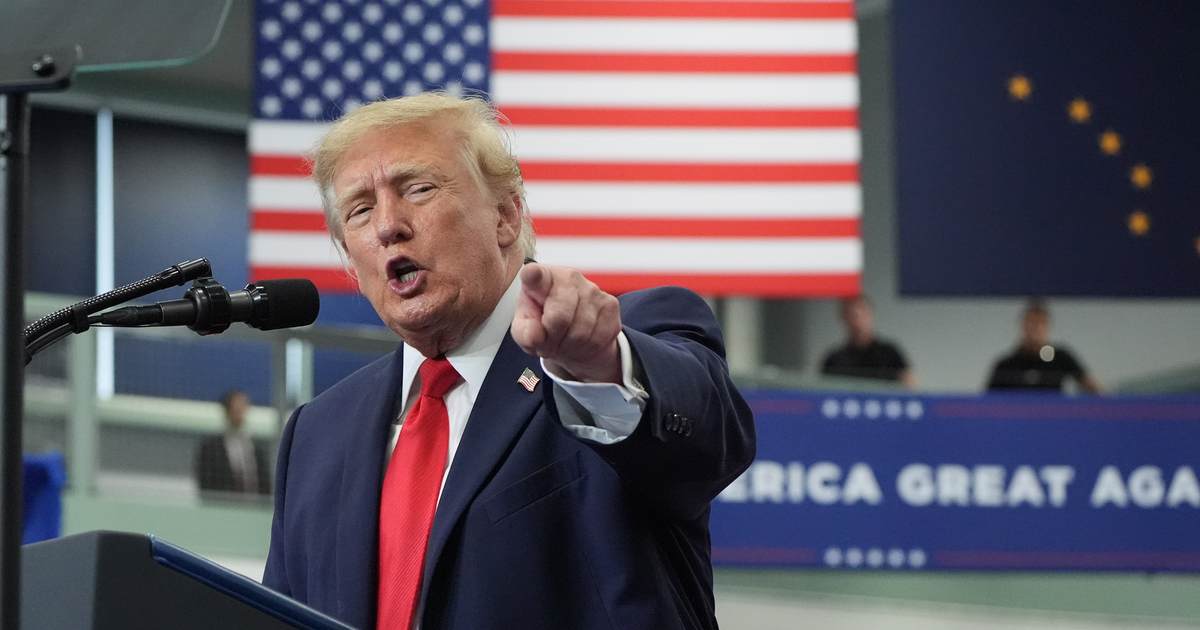
President Donald Trump isn’t waiting for the final votes to be counted before preparing for the possibility of a Democrat takeover of Congress.
And if Democrats manage to capture one or both chambers in Tuesday’s midterm elections, the president has a rather simple message for them: Meet Mr. Veto.
In an exclusive Election Day interview with CBS News, Trump laid out his plans for the second half of his presidency, including how he intends to keep advancing his agenda even if Republicans lose their congressional majorities.
“I have the ultimate power — it’s called ‘veto,'” Trump told CBS News correspondent Robert Costa.
The president even embraced the nickname “Mr. Veto,” making clear that he has no intention of signing legislation that would dismantle his administration’s accomplishments.
But Trump also believes that repeatedly blocking Democrat legislation could eventually force the opposition party to negotiate.
“Historically, you veto for a couple of months and then they come and say, ‘We’ve got to make a deal,'” he explained.
That’s one way to approach a divided government. Rather than spending the next two years begging radical Democrats for cooperation, Trump appears prepared to make them come to him.
And he has another weapon in his arsenal. According to the CBS News interview, Trump cited a major Supreme Court victory earlier this year that he believes substantially expands his authority over the federal bureaucracy.
“We won the Slaughter case and the Slaughter case gives the president tremendous powers that it never had before,” Trump said.
He was referring to Trump v. Slaughter, the Supreme Court’s June 29 decision concerning his removal of Democrat Federal Trade Commission member Rebecca Slaughter.
In a 6-3 ruling, the justices held that statutory restrictions preventing the president from removing FTC commissioners except for specific causes violated the Constitution’s separation of powers.
The decision overturned a major precedent dating back to 1935 and strengthened presidential control over officials who exercise executive authority.
For Trump, that’s no minor legal technicality. It provides additional leverage over portions of the federal government that have historically operated with considerable independence from the White House.
“The presidency, our presidency, is considered a strong presidency. You can do a lot,” Trump told CBS.
And that will matter greatly if Democrats attempt to obstruct Trump’s agenda through congressional investigations, legislative restrictions, and oversight battles.
Americans are tired of the radical Democrats’ temper tantrums about Donald Trump. We have witnessed it for a decade. It is not helping the American people. On the contrary, it is harming the country quite a bit.
CBS also reported that White House Deputy Chief of Staff Stephen Miller and Office of Management and Budget Director Russell Vought have been involved in discussions about potential executive actions, including measures involving immigration and trade.
The Trump administration has been keen on using such means to advance its agenda in the face of bureaucratic and judicial obstruction.
Trump nonetheless sounded confident about his campaign efforts heading into Election Day, arguing that his rallies helped make races more competitive.
“If you remember, about 30, 40 days ago, people were saying it’s going to be a big loss, and now people are talking about, like we could even win it,” Trump said.
“I think the tour made a big difference. I did 29 days, 33 of these things, and they were all massive rallies, they were big rallies. No one has ever done anything like it. And I think we got the word out. I think we got the enthusiasm out, too.”
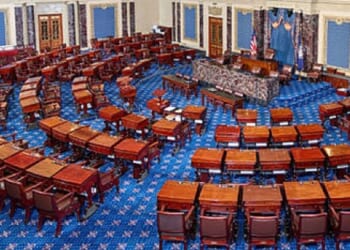
Republicans entered Tuesday defending narrow majorities in both the House and Senate. All 435 House seats are on the ballot, along with 35 Senate seats, giving voters an opportunity to decide whether Trump will spend the next two years working with a Republican Congress or battling Democrat leadership.
The stakes go well beyond the passage of individual bills. A Democrat House could launch endless investigations, issue subpoenas, and pursue impeachment charges. Democratic control of the Senate would also be a big hurdle for any Supreme Court appointments, should a vacancy arise.
But gridlock isn’t necessarily the worst outcome for Trump ahead of the 2028 presidential election.
If Democrats spend the next two years staging partisan spectacles, launching investigations, and sending crazy bills to the White House that Trump promptly vetoes, they are going to look every bit like the circus sideshow that their party has become.
For all the talk about sweeping congressional victories, the opposition party would still need a plan for governing beyond simply resisting Donald Trump.
That will become especially true as there will be a presidential election without his name on the ballot for the first time in a dozen years.
Trump made no definitive prediction about the midterm election results.
“We’ll have to see,” he said. “Will we win? We have a good chance. But we’re not going to be embarrassed.”
Whatever happens Tuesday night, the president clearly isn’t planning to spend the rest of his term as a spectator.
Trump still can issue executive actions, rein in the bureaucracy, and preside over foreign affairs.
He also has a way to stop the Democrats from advancing their radical agenda: Mr. Veto.
Editor’s Note: The Democrat Party has been infected by socialism, and it’s spreading FAST. Democrats are claiming there’s nothing to worry about, but we know the truth.
Help us continue to shine a light on the socialist takeover by joining RedState VIP. Use promo code FIGHT to get 60% off your VIP membership.