Ahmed Hussein al-Sharaa aka Mohammad al-Julani
Source: Ricardo Stuckert / PR-Lula Oficial
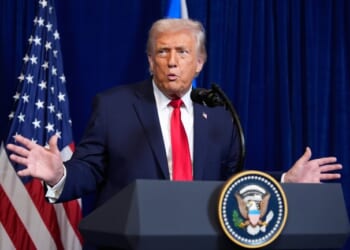
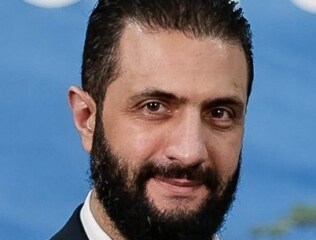
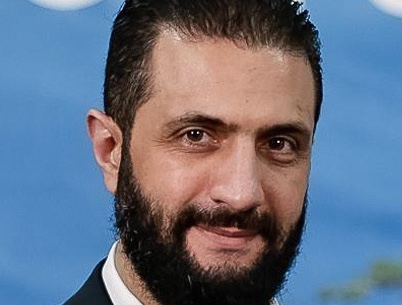
It is one of the great perversities of our age, perhaps the crowning one, that what was once condemned is now invited through the back door of the White House. Literally. On Nov. 10, Abu Mohammad al-Julani, freshly restyled as “President al-Sharaa” as if he were a boutique Damascus fragrance line, was ushered into the Oval Office through the service entrance. No cameras. No awkward questions. No reporters shouting, “Didn’t we once place a $10 million bounty on this guy?”
A few sanitized photos leaked out anyway: al-Sharaa, late of al-Nusra Front fame, flanked by Senator Rubio, smiling as if this were just another regional development summit and not the geopolitical equivalent of inviting Hannibal Lecter over to carve the Thanksgiving turkey. The White House statement blandly noted the two men discussed “regional and international issues of common interest,” which apparently include dropping the Caesar sanctions and rehabilitating a man who used to run a franchise of al-Qaeda.
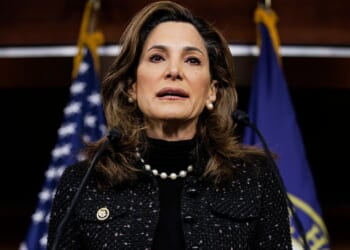
Congresswoman Marjorie Taylor Greene, to her credit, did not join the applause chorus—bless her unfiltered heart. “The new leader of Syria is a former Al Qaeda terrorist wanted by our government,” she noted dryly, “meeting with President Trump today at the White House on the US Marine’s 250th anniversary.” A nice touch of irony: commemorating the Corps by hosting the sort of fellow Marines spent two decades hunting.
“What was once condemned is now invited through the back door of the White House.”
But Washington has a short memory and a limitless appetite for farce. We’ve seen this movie before. Iraq, Libya, Syria: noble speeches at the beginning, mass graves at the end. “Responsibility to protect” always meant the responsibility to make things worse. The Pentagon promised liberation; it delivered civil war. The think-tankers promised democracy; they now send consultants to teach the survivors “best practices in post-conflict stakeholder engagement,” this from the same minds who gave the region Timber Sycamore, the CIA-MI6-Gulf joint venture that turned Syria into a live-fire theology class.
It didn’t start yesterday. The impulse goes back to the early 2000s, when Gen. Wesley Clark revealed in 2007 that, just weeks after 9/11, he was handed a classified memo from Donald Rumsfeld’s office listing seven governments to be toppled in five years: Iraq, Syria, Lebanon, Libya, Somalia, Sudan, and Iran. A sort of neocon shopping list, regime change as a Costco bulk purchase. The idea was to remake the region and, as a bonus for the geopolitically minded, squeeze Russia like a recalcitrant tube of toothpaste.
Two decades on, the bill has finally thudded onto the table. We’re left with a mosaic of failed states, smoldering rubble, and the near extinction of Christianity in the land of its birth. America’s “moderate rebels,” moderate chiefly in their enthusiasm for beheadings on YouTube, helped drive out communities whose churches were standing when Muhammad was still a child. And in one of those historical ironies so large you could see it from orbit, Russia wound up intervening on the Syrian government’s side of the civil-war catastrophe to defend the very Christians Washington’s protégés were busily expelling. Naturally, this was portrayed in Washington as “standing up for democracy,” a term that, like the local archaeology, has been worn down to dust.
Under Assad, Syria was a police state, but at least it was a plural police state. Christians, Druze, Alawites, Armenians, and secular Sunnis all coexisted under a regime that kept both the mullahs and the mobs on a short leash. Then came Western virtue. We armed the “moderate rebels,” who, in one of history’s least surprising plot twists, turned out to be immoderate head-cutters.
Result: The Christian population plunged from 1.5 million to a few hundred thousand, and some monasteries older than Islam were reduced to rubble—progress, as defined by the State Department’s traveling circus of nation-builders.
So when Washington now rolls out the red carpet (or rather, the back-corridor carpet) for al-Sharaa, it isn’t diplomacy. It’s a confession of guilt masquerading as statecraft. We helped unleash the chaos that bred him, and now we call him “Mr. President” to prove we’ve learned absolutely nothing. It’s like congratulating the arsonist for rebuilding the house he burned down, with your matches.
The hypocrisy would be hilarious if it weren’t marinated in blood. One week, the administration threatens air strikes to save Christians in Nigeria; the next, it wines and dines the man whose ascent exterminated them in the Levant. Only in Washington could a “values-based foreign policy” be so simultaneously self-righteous and morally bankrupt.
What explains it? Habit, mostly. Since 2001 the bipartisan establishment has treated regime change as a form of therapy, Alden Pyle with a Pentagon budget. Graham Greene’s lethal innocent has been reborn in Washington: the well-mannered idealist who talks about “stability” while turning countries into morgues, then wonders why the locals aren’t grateful. Each failure only deepens the faith. Interventionism is the one religion Washington still believes in. And presiding over this spiritual disorder is a permanent priesthood: the neoconservatives at State, the regional strategists sprinkled through the Pentagon and the alphabet agencies, for whom every crisis is a nail and American power the only acceptable hammer. Their worldview is simple enough to fit on a cocktail napkin: Israel formulates its regional priorities, and Washington provides the muscle. What begins as someone else’s strategic wish list soon graduates into a White House “urgent priority,” complete with talking points about freedom, stability, and other abstractions nobody on the ground will ever see. It’s not a conspiracy; it’s a habit, a reflexive subcontracting of American blood and treasure to advance another country’s to-do list.
And nowhere is the tragedy more visible than in Suwayda, home to Syria’s largest Druze community, a people whose theology is so esoteric it makes Kabbalah look like a pamphlet. The warning shot came in March, when Sunni Islamist factions massacred Alawite families along the coastal belt, a gruesome dress rehearsal for the sectarian season to come. By July the violence had migrated south: Druze militias were trading fire with Sunni Bedouin fighters, the clashes grinding on at a low but lethal tempo ever since, leaving more than a thousand dead and whole villages emptied. Under Assad, the Druze were not merely tolerated but fully integrated into the machinery of the state, part of the tacit coalition of minorities that kept the country stitched together. Under al-Sharaa, they are targets. The Ministry of the Interior calls them “bandits.” Of course it does. Every regime engaged in sectarian suppression calls its victims bandits; it’s the oldest euphemism in the book. And for Syria’s Christians, it is a harbinger: What began on the coast and now engulfs Suwayda will, in time, come for them.
And yet the international community, loud on Ukraine and Gaza and greenhouse gases, falls eerily silent on this. It isn’t hypocrisy; it’s self-preservation. To confront Syria honestly would require admitting that Western policy helped midwife a jihadist government in Damascus.
Far better to pretend that “peace has broken out,” even as the hills of Suwayda insist otherwise.
This is not stability. It is quiet ruin, a counterfeit calm presided over by the new men in suits who, not long ago, were quoting Ibn Taymiyyah between executions.
And someday, when the masks slip, when the new Syria reveals itself not as a fresh start but as the latest act in the same long war, the pundits will feign surprise and ask, “How did this happen?”
But we know.
We always did.