The Sixth Amendment has long guaranteed a criminal defendant the right “to have the Assistance of Counsel for his defence.”
But what does that right entail in practice—particularly when a defendant takes the witness stand in his own defense? And by taking the witness stand, what limitations, if any, exist with respect to his right to have assistance of counsel during his testimony?
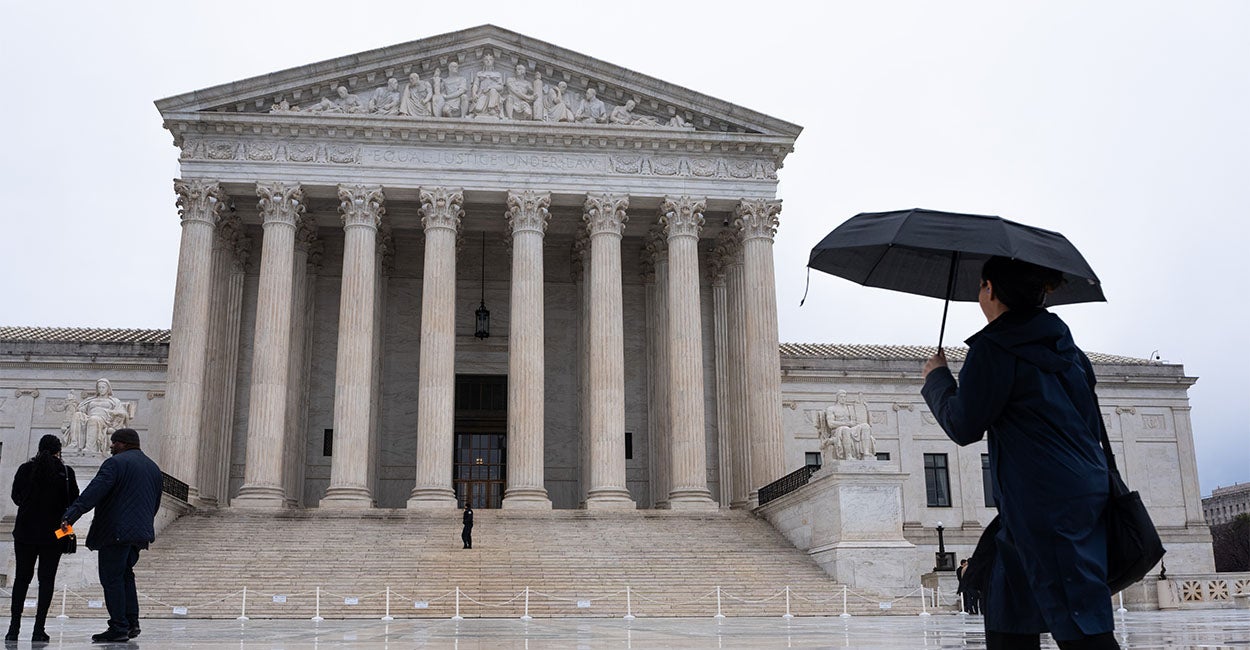
In a 9-0 decision in Villarreal v. Texas, the Supreme Court justices agreed that a trial judge can constitutionally prohibit a defendant and defense counsel from conferring about the substance of the defendant’s testimony during a mid-testimony overnight recess—in other words, where the court takes an overnight break during the middle of the defendant’s testimony.
The court left in place its prior precedent that trial courts may constitutionally bar all communication between a testifying defendant and his attorney during a very short mid-day break in testimony because discussions during such a pause will likely focus on “nothing but the testimony.”
Keep in mind that the Fifth Amendment’s right against self-incrimination means that a defendant does not have to testify in his own defense. The burden of proving the case beyond a reasonable doubt always rests with the government.
And, in fact, as Justice Samual Alito pointed out in his concurring opinion, “[w]hen the Sixth Amendment was adopted . . . criminal defendants could not testify in their own defense because they were not considered competent witnesses.” He further explained that most “States did not allow defendants to take the stand until well into the 19th century, . . . and this Court did not squarely recognize a defendant’s constitutional right to testify in his own defense until” 1987.
But as Justice Ketanji Brown Jackson made clear in her majority opinion, “when a defendant takes the witness stand in his own defense, his status shifts. He does not shed his rights as a criminal defendant. But he does assume some of the burdens of a testifying witness.”
And one of those burdens is not discussing his testimony with anyone—including his attorney—while it’s happening. She explained that avoiding the “midstream tinkering” of his lawyer “serves the central truth-seeking function of trial”—as it does with any witness.
Still, as the court’s precedents make clear, and as the justices reaffirmed in this case, a trial court cannot constitutionally prohibit all communications between a defendant and his lawyer during an overnight recess. Essentially, they can confer about any topic unrelated to “managing” the defendant’s testimony. An order instructing as much appropriately balances “the [defendant’s] right to counsel against the burden of offering unaltered trial testimony.”
Justice Clarence Thomas, joined by Justice Neil Gorsuch, concurred only in the court’s judgment but did not join its opinion. He worried that the court’s opinion “opine[d] on hypothetical situations not before the Court and [as a result] needlessly expands [the Court’s] precedents.”
Thomas wrote that the majority “identifies new circumstances, not presented here, in which a defendant supposedly has a right to discuss matters related to his ongoing testimony” and in doing so endorsed a methodology where “any conflict between the Sixth Amendment and the desire for untutored testimony must ‘be resolved in favor of the right to the assistance and guidance of counsel.’”
Still, all justices agreed, the trial court here struck the appropriate balance between Villarreal’s Sixth Amendment right to counsel and the need for unaltered trial testimony by limiting discussions during the mid-testimony overnight break between him and his attorney to those unrelated to “managing” his testimony.
As a result, the court rejected David Villarreal’s challenges and upheld his conviction.