
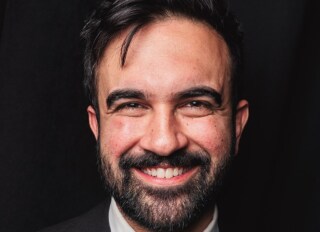
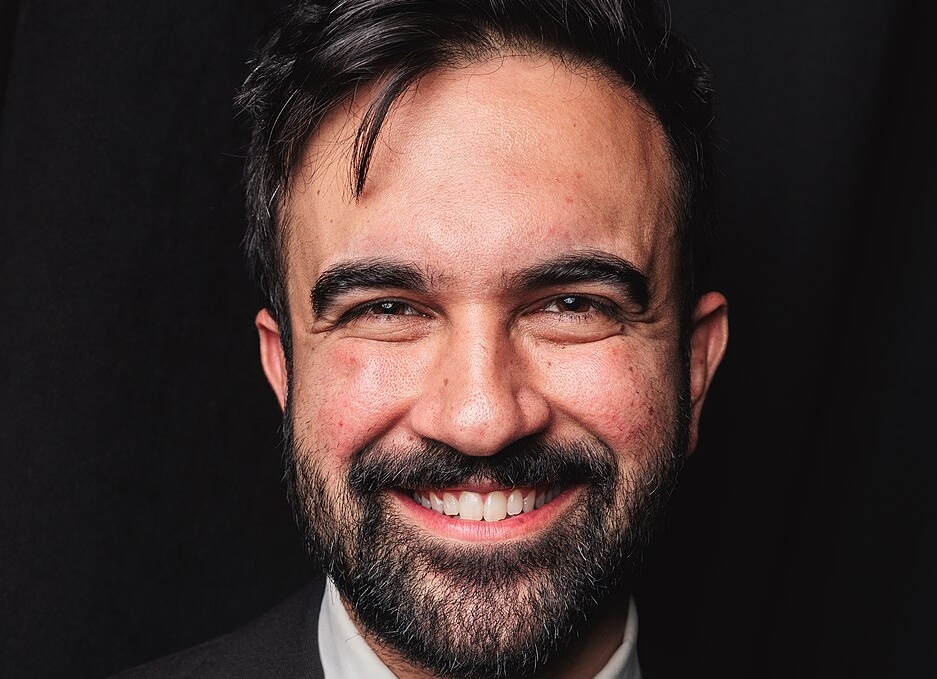
Zohran Mamdani
Source: Dmitryshein
It was the best of times if you owned a Che Guevara T-shirt and believed the rent fairy would one day sprinkle socialism over SoHo. It was the worst of times if you paid taxes, owned property, or thought competence should still count for something. New York has elected Zohran Mamdani, a self-described democratic socialist and part-time poet, as mayor of the largest city in the United States. His victory speech wasn’t the usual civic bromide about unity and hard work; it was fiery, bordering on revolutionary, the sort of oration that makes you check whether the podium conceals a guillotine. The new mayor’s dislike for Donald Trump was on full display at his thunderous rally, where he all but challenged the president to a rhetorical fistfight: “Donald Trump, since I know you’re watching, I have four words for you: Turn the volume up.” Judging by Trump’s personality, he will. The man who put his name on half of Manhattan isn’t likely to take that kind of jab lying down. For him, this isn’t just politics. It’s personal—and the fight will not stay polite.
But beneath the fireworks and fighting words lies a harder truth. Cities, like civilizations, don’t change through speeches but through arithmetic. The math matters more than the manifesto. When enough people move in who think differently, the old city becomes the new one—and the politics follow as predictably as pigeons after a hot dog bun. New York, once the capitalist citadel of the world, has now installed a man who regards profit as a necessary evil and landlords as an enemy class.
At his victory party, Jennifer Welch, podcast host, cultural gadfly, and patron saint of performative progressivism, gushed to MSNBC’s Mehdi Hasan that “Americans have no culture except multiculturalism…. Crusty white people need to learn how to embrace it.” It was the voice of a certain kind of modern moralist: self-satisfied, media-savvy, and serenely convinced that erasing one’s heritage is the height of sophistication. Cultural self-erasure, it seems, is now a civic virtue.
“When a society teaches its elites to feel guilty about their own civilization, it shouldn’t be surprised when they vote for its dismantling.”
If the story sounds familiar, that’s because London wrote the first draft. Sadiq Khan, now on his third term, governs a once-English city rebranded as “post-British.” The old working class has been priced out, the middle class taxed out, and the new arrivals courted as a permanent electoral base. Khan calls this inclusivity. Dickens would call it irony. In A Tale of Two Cities, the poor rose against the rich; in Khan’s London, and now Mamdani’s New York, the governing class poses as the oppressed while living off the spoils. And this is not an isolated case. It is the story of every major Western metropolis. Paris, Toronto, Berlin, San Francisco—each has discovered that you don’t need to persuade voters if you can import them. Immigration supplies the numbers; identity politics supply the loyalty. The result is a soft one-party state run on ethnic arithmetic. The old civic idea of a shared culture has been replaced by a coalition of resentments—each voting as a tribe while congratulating itself on being cosmopolitan.
Mamdani’s platform reads like a wish list from the faculty lounge: more public housing, more free services, more defiance of immigration law. Chicago’s mayor and Illinois’ governor would nod approvingly. He even proposes taxpayer funding to expand access to gender-affirming health care, as if the city that can’t fill potholes can somehow afford to bankroll hormone therapy. He vows to triple the number of “union-built, state-funded homes,” as though bureaucracy ever built anything except more bureaucracy. But it hardly matters. The applause isn’t for competence; it’s for creed. The electorate has changed. The taxpayers who fled to Florida, New Jersey, and Connecticut no longer count. The new voting blocs—poorer, younger, more immigrant, more dependent on subsidy—hear in Mamdani’s promises not a warning but a pledge.
The New York Times swooned that Mamdani and London’s Sadiq Khan “embody a liberal, Muslim modernity navigating diverse communities.” Translation: This is what you’re getting, and you’ll like it. It’s the polite media euphemism for demographic inevitability—as if the transformation of a city were an act of nature, like the tides or the weather, rather than a political project with arithmetic attached. Meanwhile, reports swirl that Soros-linked charities funneled $40 million into Mamdani’s campaign. Progressives, of course, only object to billionaire influence when it comes from the wrong billionaires. When their own oligarchs buy elections, it’s called “civil society.”
His victory marks what one might call the Brazilianization of America: gleaming towers above, chaos below, and a managerial elite congratulating itself on its compassion while commuting past the wreckage. The middle class that once anchored civic life has been hollowed out, replaced by two tribes—the permanently dependent and the permanently detached. One lives on the state; the other off it. In between stands the dwindling taxpayer, yoked to both.
New York didn’t collapse overnight. The rot set in years ago, moral before fiscal. When a society teaches its elites to feel guilty about their own civilization, it shouldn’t be surprised when they vote for its dismantling. Mamdani has never managed anything larger than a protest march, yet he now presides over a bureaucracy with a budget bigger than most nations. The result will be a fiscal catastrophe disguised as moral progress. Taxes will rise, investment will flee, crime will climb—and the faithful will insist that this only proves how deeply the old order was corrupt.
London has already lived this farce. When Khan dismissed knife crime and terrorism as “part and parcel of living in a great city,” he wasn’t joking. He was delivering the new civic creed: decline as diversity, chaos as compassion. New York, ever eager to imitate the worst of British ideas with an American accent, is next in line.
Mamdani didn’t persuade New Yorkers; he inherited them. The arithmetic did the work. The city that once minted financiers now manufactures grievances. The metropolis of Guys and Dolls has become a sociology department with subway access. And yet the moral vanity endures. The new progressivism congratulates itself on being cosmopolitan while remaining parochial, enlightened while policing heresy. It preaches diversity and punishes disagreement, forever mistaking conformity for compassion. And the moment anyone dares note that the electoral map now mirrors ethnic and religious lines, the air-raid siren of “racism” sounds to drown the arithmetic. Facts don’t care about feelings—but feelings have the votes.
Dickens’ guillotine solved nothing; it merely reset the hierarchy. Today’s revolutionaries prefer taxes to tumbrels and bureaucrats to sansculottes, but the outcome is the same: the productive punished, the parasitic empowered, and everyone else applauding their undoing. London learned this lesson first, mistaking erosion for enlightenment and calling it progress. New York, ever eager to import its cousin’s mistakes, now writes the American chapter of the same morality play.
Perhaps Mamdani will surprise us and discover that budgets don’t balance by sermon, and that you can’t subsidize your way to solvency. But I wouldn’t wager the rent. History suggests otherwise.
New York’s tragedy isn’t that a socialist won; it’s that no one else could. Andrew Cuomo, scion of the old machine, couldn’t even make it close. Curtis Sliwa, the last man still speaking the language of crime and consequence, might as well have been campaigning in Esperanto. Mamdani didn’t seize New York; he inherited it—a city too demographically altered and too ideologically exhausted to resist. He isn’t the cause of its decline but the consequence, the arithmetic end of cultural self-loathing and imported loyalty.
“It was the best of times, it was the worst of times.” Dickens wrote it as contrast. In 2025, it reads like prophecy—and in this transatlantic tale of two cities, London and New York are merely verses of the same elegy.