Moments of true clarity are all too rare in our pampered, distracted lives.
We seek endless entertainment, filling our days with buzz, gossip, sports, and movies to avoid the inevitable truth: we are all going to die.
Unlike our ancestors, we don’t witness death constantly. We don’t even consider how lucky we are to have escaped what they faced—infant mortality, death in childbirth, more frequent wars, and ever-present disease and poverty.
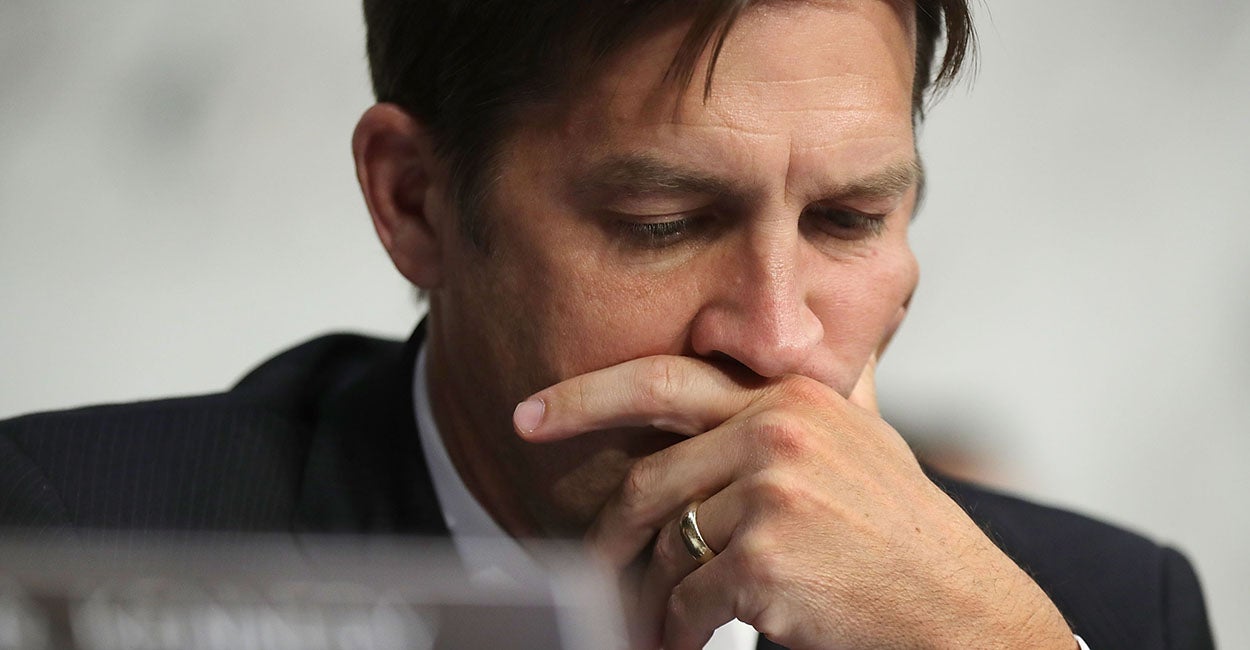
So, when someone like former Republican Senator Ben Sasse announces that he’s been diagnosed with stage 4 pancreatic cancer, it puts us face to face with our own mortality.
Sasse, at 53, had to tell his parents that they’ll probably be burying their son. He had to tell his daughters that he won’t be there to walk them down the aisle. Then, he gave the world this news—and he also gave the reason for a hope that is in him.
We All Have a Death Sentence
“Advanced pancreatic is nasty stuff; it’s a death sentence,” he wrote. “But I already had a death sentence before last week too — we all do.”
Even insulated from the constant experience of death as we are, we know that death is coming. It’s nearly impossible to watch the news without hearing of death: the death of Renee Nicole Good, the death of Scott Adams, the death of 31-year-old Charlie Kirk—who left a wife and two very young children.
Each death is a tragedy, but each death also presents an opportunity for us to learn.
When my time comes, I pray I have the courage and faith to face death like Ben Sasse.
Ben Sasse’s Courage and Hope
Sasse announced his “death sentence” two days before Christmas, and he said the season of Advent was a fitting time to do so.
Why? Because Advent isn’t just the four weeks leading up to Christmas, it’s also a time for Christians to look forward with anticipation to the Second Coming of Jesus. It’s a time to “orient our hearts toward the hope of what’s to come.”
For those who don’t know, Jesus promised that he would return to earth from heaven, that the dead would be raised, and that those who accept his gospel would enjoy a new kind of life, where every tear will be wiped away. Christians don’t earn this eternal salvation—it’s only available for us because Jesus himself paid the penalty for our sins, and God calls us to follow him, to love others and die to ourselves.
Sasse rightly noted that this isn’t some “abstract hope in fanciful human goodness,” or a “Hallmark-sappy spirituality,” or even a reliance on our own strength.
It’s a “stiffer” hope, the hope of those walking in darkness who have seen a light off in the distance. It’s the hope of God telling Abraham that he will give his descendants the land of Israel—after they spend 400 years in Egypt. It’s the hope of God telling the Israelites in Babylon that they’ll be able to return home—after 70 years in exile. It’s the masculine hope that gives us strength to hold out amid tribulation, because the destination is worth the journey.
Sasse said it’s the kind of hope you shout “often properly with a gravelly voice soldiering through tears.”
This hope “doesn’t dull the pain of current sufferings,” but it does put them in a new perspective.
None of this means Sasse—who attended Harvard as a wrestling recruit—is just going to throw in the towel.
“I’m not going down without a fight,” the former senator writes. “One sub-part of God’s grace is found in the jawdropping advances science has made the past few years … Death and dying aren’t the same — the process of dying is still something to be lived.”
Sasse viscerally feels the pain of losing the muscle he was so proud to have put on as a youth. His body is breaking down, but he isn’t giving up his fighting spirit.
Most importantly, he’s using the last few public messages of his life to share something important with the world. His hope isn’t found on earth, but in the promises of Jesus. Ben Sasse may not be able to stop the decay of his body, but he can encourage us to take hold of the thing that gives him the most important hope.
Flesh and blood cannot inherit the kingdom of God, but I tell you a mystery: this mortal body will put on immortality. Though worms destroy this body, yet in my flesh shall I see God.
We work hard to distract ourselves, but the truth of our mortality will break through, sooner or later. Is there a reason for this kind of hope within you? I pray that there is.