Saudi Arabia has decided to grant U.S. forces access to King Fahd Air Base in Taif, a facility not open to U.S. operations since the Gulf War.
Bahrain has moved at the United Nations to pass a Security Council resolution blasting Iranian strikes on its Gulf neighbors.
The United Arab Emirates has cut diplomatic ties with Tehran and shut down Iranian-linked institutions.
These developments in the Middle East all point toward one conclusion, according to an analysis at Fox News, that Iran’s Gulf “allies” actually are choosing a “consequential shift.”
That would be “closer to Washington.”
For years the Middle East empires have balanced their relationship with Iran against their need for help from Washington, but the report said that line is getting narrower.
“Multiple countries — including Saudi Arabia, the UAE, Qatar and Kuwait — have issued coordinated statements denouncing Iran’s actions and asserting their right to self-defense,” the report noted.
They agree, essentially, with the U.S. that “Iran’s missile development, uranium enrichment programs and support for regional militant groups need to be ‘addressed and curtailed,’” the report said.
BREAKING NEWS
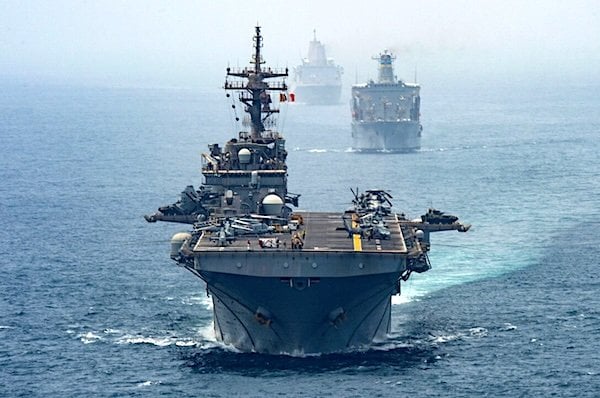
The United Arab Emirates is pushing for a multinational naval force to reopen the Strait of Hormuz amid rising tensions involving the United States, Israel, and Iran.
⛴️ The UAE has offered to deploy its navy and is calling on allies to join a joint maritime… pic.twitter.com/9Ze6U7qLhP
— Latest news (@issu_official0) March 27, 2026
The report noted Qatar has expelled Iranian military and security officials, but stopped short of fully severing ties.
The Saudi government’s statement added, “Our primary concern today is to defend ourselves from the daily attacks on our people and our civilian infrastructure. Iran has chosen dangerous brinkmanship over serious diplomatic solutions. This harms every stakeholder involved but none more than Iran itself.”
Gulf leaders still stop short, the report said, of joining combat forces and they still recommend diplomatic paths but their frustrations appear to be growing.
Especially because of Iranian warfare against their territories.
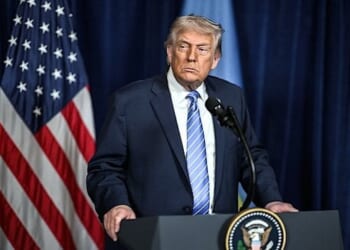
President Trump has warned about the situation: “They start shooting in Qatar, Saudi Arabia, UAE, Kuwait, Oman. They start shooting at them. And they were — they were. Everybody was shocked, including us. You know why? Because they’re sick. And they had a plan to take over the Middle East.”
Iran, following the launch of the U.S. and Israeli project called Operation Epic Fury, has lashed out militarily against many regional partners and neighbors.
Analysts said in the report Gulf states could expand cooperation with the U.S. if they wanted to.
They also could pick specifics on which to agree with U.S., such as the restoration of traffic through the Strait of Hormuz.