

When most people picture modern conflict, they may think about missiles and attack aircraft for deep strike missions like we have seen over the last week with Operation Epic Furry in Iran, drones, or perhaps cyberattacks. Most however, do not picture a ship dragging an anchor across the seabed to destroy a fiber-optic cable in cold water. However, that is exactly the point. The most dangerous attacks are often the ones that look accidental at first. In Europe, that is no longer a theory. It is a pattern. The Baltic has seen repeated damage to cables and pipelines since Russia’s full-scale invasion of Ukraine, and the incidents continued into late 2025 and January 2026.
That matters because undersea cables are not niche infrastructure. They are part of the nervous system of our modern world. More than 95 percent of internet traffic travels through undersea cables and they support an estimated $10 trillion in financial transactions every day. If those lines are cut or disrupted, the effects do not stay underwater. They move quickly into banking, communications, logistics, and even military coordination; they are a matter of national security.
Those who have not already, should stop treating these incidents as isolated technical failures and start treating them as what they are: pressure tests on Western, and more specifically NATO, resilience. By January 2025, officials were already counting at least 11 damaged Baltic cables since October 2023. Then came more cases, including the recent seizure of the vessel Fitburg after damage to a telecom cable between Finland and Estonia on December 31, 2025, and then another cable incident between Lithuania and Latvia in early January 2026. Some cases may turn out to be negligence rather than sabotage. However, that does not make the strategic problem less serious. In gray-zone competition, ambiguity is the weapon.
Russia understands this reality well. So do other authoritarian states that prefer deniable disruption over open escalation. A cable strike does not need to cause a nationwide blackout to succeed. It only needs to create uncertainty, disruption that force governments to divert resources, and remind the public that their societies depend on infrastructure they cannot see and rarely protect. That is why attacks on undersea systems are so attractive. They are cheap compared with the damage they can cause, and they sit in the gray space between commercial risk, criminal activity, and national security. NATO has now described the damage to Baltic energy and telecom cables as part of a broader campaign of sabotage and destabilization.
To be fair, NATO and the European Union are no longer asleep on this matter. NATO created the Critical Undersea Infrastructure Network in 2024 and launched Baltic Sentry in January 2025, adding frigate patrols, maritime patrol aircraft flights, drone-intelligence surveillance and reconnaissance (ISR) asset employment, and closer coordination with national surveillance means. In February 2025, the European Commission released a Joint Communication to the European Parliament for an EU Action Plan on Cable Security, built around detection, response and repair, as well as deterrence. A year later in February 2026, the European Commission backed that plan with a new Cable Security Toolbox and roughly €347 million for priority projects, monitoring and repair capacity, with the Baltic as an early focus due to the recent heavy activity and incident rate. These are real steps in the right direction!
But they are they enough?
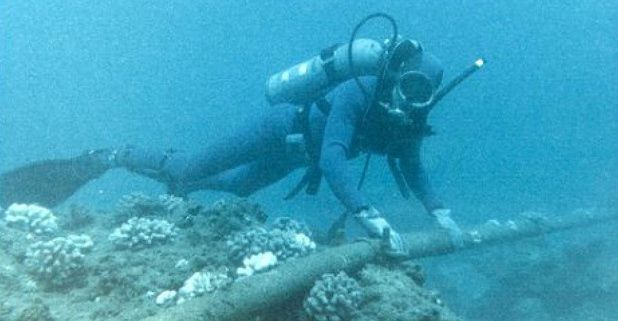
Right now, the West collectively is building a better response to cable damage. What we still lack, however, is a durable system for preventing it. Does NATO remain too dependent on temporary surges, national and international investigations and boardings, and reactive patrols after each new incident? The EU is improving resilience, but resilience is not the same thing as deterrence. It seems that we still do not have a standing, integrated structure that combines military surveillance, commercial operators and repair capabilities, intelligence sharing, legal authorities, and rapid repose management in one place.
So, is this the best next step for NATO to take? I argue that the time has come for the alliance, working closely with the EU, to establish a permanent undersea infrastructure protection mission with three jobs. First, they should maintain persistent maritime domain awareness over key cable corridors and chokepoints, using naval surface and air patrols, drones and unmanned undersea vessels (UUVs), commercial data, and national ISR sensors. Second, they should fuse government and industry information trough well established public private partnerships which fast and effective enough to identify suspicious behavior before a cable is damaged, not just afterward. Third, they should establish a real playbook for response: who investigates, who repairs, who communicates with the public, and what penalties follow if a hostile act is confirmed?
This should not be a loose coordination cell with broad talking points. It should be an operational mission with assigned roles and responsibilities, regular and reoccurring joint and allied exercises, and clear ties to commercial cable owners and repair facilities. NATO has already started moving in that direction. The problem is that our adversaries are moving faster. Every new incident teaches them something about what seams exist: where legal authorities break down, where private companies and militaries fail to share information, and where democracies hesitate because they are unsure whether a cable cut was sabotage, negligence, or just bad weather.
Some critics will say that NATO already has too much on their plate. Russia’s war against Ukraine continues. The Middle East remains unstable, and NATO partners are now kinetically involved in Iran. However, that is exactly why this issue matters. An alliance that cannot protect the infrastructure carrying its digital communications and finance data, as well as internet services at large, is weaker in every theater, not just one. Protecting undersea cables is not a distraction from collective defense. It is now part of collective defense.
Hopefully, the Baltic and all NATO partners have ended the old debate by now. The question is no longer whether critical undersea infrastructure is a security issue. NATO and the EU have begun to answer that question with their actions. Now part of the question, is it enough, and is the rest of the West ready to act with enough speed and seriousness to stay ahead of the next disruption. If we wait for a larger failure before building a stronger system, we will learn the same lesson too late: the modern world does not need to be bombed into silence. It can be quietly unplugged.
J.P. Thompson is an active-duty Officer in the U.S. Navy, with specialties in Anti-Submarine Warfare, Air & Missile Defense, and Intelligence. He is currently the Associate Professor of Naval Science at the University of Illinois and is a Doctoral student of Law & Policy at Northeastern University.
The opinions expressed are the author’s own.
This article was originally published by RealClearDefense and made available via RealClearWire.