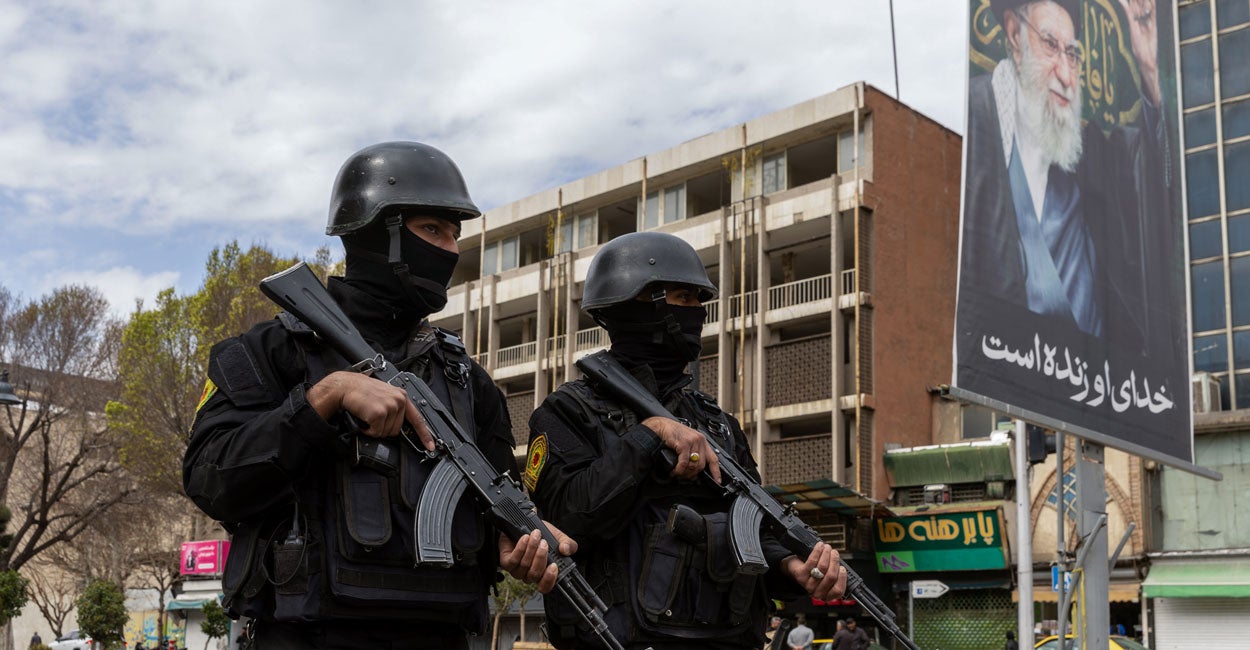
Iran’s Supreme Leader Ali Khamenei is dead, and there is no clear successor to take his place.
“The supreme leader made sure there was never any sort of heir apparent,” Victoria Coates, former deputy national security adviser to President Donald Trump, explained to The Daily Signal.
The Islamic Republic of Iran was established in 1979 following the Iranian Revolution. Since then, the country has only had two supreme leaders—Ruhollah Khomeini, who died in 1989, and Ali Khamenei, who was killed over the weekend during the joint U.S.-Israel operation against the Iranian regime.
In Iran, the supreme leader is chosen by a body of 88 clerics known as the Assembly of Experts. Until a new leader is chosen, or another authority takes power, the Islamic Republic’s constitution gives power to a three-member council, which today includes Iranian President Masoud Pezeshkian, Chief Justice Gholam-Hossein Mohseni-Ejei, and Ayatollah Alireza Arafi.
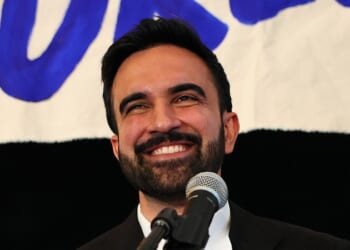
A concern right now, according to Gregg Roman, the executive director of the Middle East Forum, is another “one man band” will fill the power vacuum in Iran.
The son of the former shah of Iran, Reza Pahlavi, is certainly a figure to watch, Roman explained during a phone call with The Daily Signal from the bomb shelter of his home in Tel Aviv as sirens sounded in the background.
“I think Pahlavi, he has a role in this, but I think that the way in which he approaches his messaging and the way in which his organization is putting him as the only alternative is one that takes away from the power of a unified opposition,” Roman explained.
On Sunday, Pahlavi, who is the oldest son of the last shah of Iran and lives in exile in the United States, addressed the people of Iran in a long post on X.
“My message to the remaining officials of this Republic of Terror is this: Surrender to the people of Iran. Declare your loyalty to my program and the Transition System. And hand over power without further bloodshed,” Pahlavi said.
Roman says that instead of arguing for his own leadership, Pahlavi would be wise to convene the leaders of “the 50 biggest Iranian opposition parties.” Right now, Roman explains, the son of the former shah has ideas and plans on paper, but it is unclear who his governing team would be if he landed in Tehran tomorrow.
“A nonviolent transition of power” is the ideal, according to Rob Greenway, director of the Allison Center for National Security at The Heritage Foundation, but getting there is a “tortured path, because there isn’t sufficient unanimity among the resistance groups, and it’s impossible to judge the support that any of them have inside Iran.”
The “state,” meaning the remnants of the Iranian regime, “still holds a monopoly of force, and so it will be voluntary on their part to cede power, and it’s unlikely that’s going to occur because they’re ideologically predisposed,” Greenway says.
The Iranian regime holds to the principles of radical Islam and governs Iran through Sharia law.
The “most likely” and an “acceptable” outcome in Iran is “we don’t have a friendly government there, but they no longer have the capacity to really effectively threaten us, which means that we would preserve our interests without a doubt, and … our partners and allies would be more than capable of dealing with the threat, which then doesn’t require us to continually surge significant troops into the region,” Greenway said.
Ultimately, the question of Iran’s governance is “for the Iranian people themselves to determine,” Jacob Olidort, director of American security at the America First Policy Institute, told The Daily Signal.
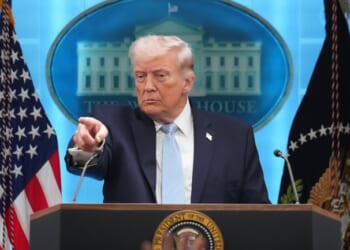
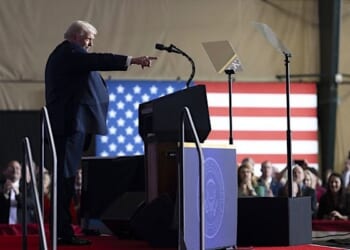
Trump has made it clear that the key objective of the current U.S. operation is ensuring that Iran never has the ability to obtain a nuclear weapon. Trump’s objectives in Iran “are shaping conditions on the ground to enable a more favorable environment for the Iranian people to shape their country’s destiny,” Olidort said.
Trump says the U.S. operation in Iran that began Saturday could last up to four or five weeks.