This week Christians around the world of all strands celebrate what we consider some of the most significant events in world history – the death, burial and resurrection of Jesus Christ on behalf of the salvation for those who believe in the Lord.
There are many historical reasons to believe in these events, which I’ve addressed in previous columns, such as this and this.
Meanwhile, as a student of American history, I find it fascinating that, for the most part, the vast majority of our nation’s settlers and Founding Fathers also believed it.
Here are some examples just from the founding era. Special thanks to my good friend Bill Federer and his “America’s God and Country” for his indirect help with this column.
- George Washington and the Plaque Behind his Sarcophagus
If you visit Mount Vernon, George Washington’s home, you can see where he and his beloved wife, Martha, are buried. Behind their two sarcophagi are the words of Jesus, chiseled in stone, from John 11:25-26 from the King James Version: “I am the resurrection, and the life: he that believeth in me, though he were dead, yet shall he live …”
George and Martha affirmed their belief in the resurrection of the Lord regularly at church, as they arose with the rest of the congregation and read aloud the words of the Apostles’ Creed, which affirms that historical event.
- Founding Father Roger Sherman and “the Resurrection of the Dead”
Roger Sherman from Connecticut not only signed the Declaration of Independence, but 11 years later, he played a significant role in the Constitutional Convention. He proposed a great compromise that “prevented a stalemate between states during the creation of the United States Constitution.” He argued that big states and little states each should have the same number of senators, while the number of representatives depended on the population of each. Adopting his idea helped them break a logjam in the proceedings.
Roger Sherman declared, “The scriptures of the Old and New Testaments are a revelation from God, and a complete rule to direct us how we may glorify and enjoy him.” And, of course, the New Testament could not be clearer that Jesus rose from the dead, bodily.
Sherman also said, “I believe that the souls of believers are at their death made perfectly holy, and immediately taken to glory: that at the end of this world there will be a resurrection of the dead, and a final judgment of all mankind.”
- Founding Father Elias Boudinot on “the Resurrection of the Savior of Mankind”
Before the Constitution, there was the Articles of Confederation, in effect from 1781-1789. We actually had a handful of presidents of the United States under that document’s governance. (George Washington is our first president under the Constitution, which has been in effect since 1789.) Boudinot of New Jersey was one of those earlier presidents. Later, as a congressman, he helped frame the Bill of Rights (1791).
Boudinot once stated, “The deliverance of the children of Israel from a state of bondage to an unreasonable tyrant was perpetuated by the Paschal lamb, and enjoining it on their posterity as an annual festival forever. … The resurrection of the Savior of mankind is commemorated by keeping the first day of the week.”
- Founding Father Benjamin Rush and the “Glorious Resurrection”
Dr. Benjamin Rush, who signed the Declaration of Independence as a delegate from Pennsylvania, was a leading pioneer in American medicine. Upon his deathbed, he prayed to the Savior this classic invocation: “By the mystery of Thy holy incarnation; by Thy holy nativity; by Thy baptism, fasting, and temptation; by Thine agony and bloody sweat; by Thy cross and passion; by Thy precious death and burial; by Thy glorious resurrection and ascension, and by the coming of the Holy Ghost, blessed Jesus, wash away all my impurities, and receive me into Thy everlasting kingdom.”
And there are examples from …
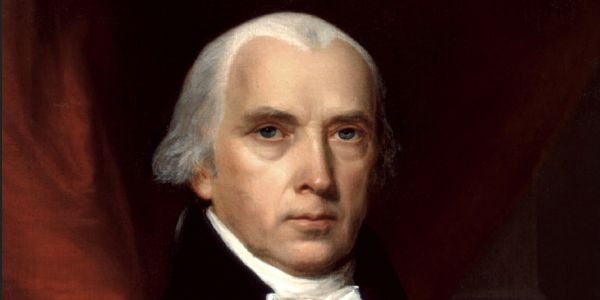
- President James Madison and the Doubting Thomas incident in John’s Gospel – where the previous skeptic, seeing the resurrected Christ, declared, “My Lord and my God.”
- President Thomas Jefferson (a bit of a Doubting Thomas himself) remarked at his deathbed to his weeping family, “Lord, now lettest thou thy servant depart in peace.” The third president was quoting Simeon, a man in the Temple in Luke 2, who had waited for decades for the Messiah to come. When he saw the baby Jesus, he made this remark that Jefferson quoted centuries later.
- First Chief Justice John Jay, who wrote to his children after his wife, their mother, died in 1802, on the comforting nature of the Lord’s resurrection.
The death, burial, and resurrection of Jesus are events that changed the world. And many of our founders and even presidents have found comfort in what the Savior has done for us. He is risen. He is risen indeed!