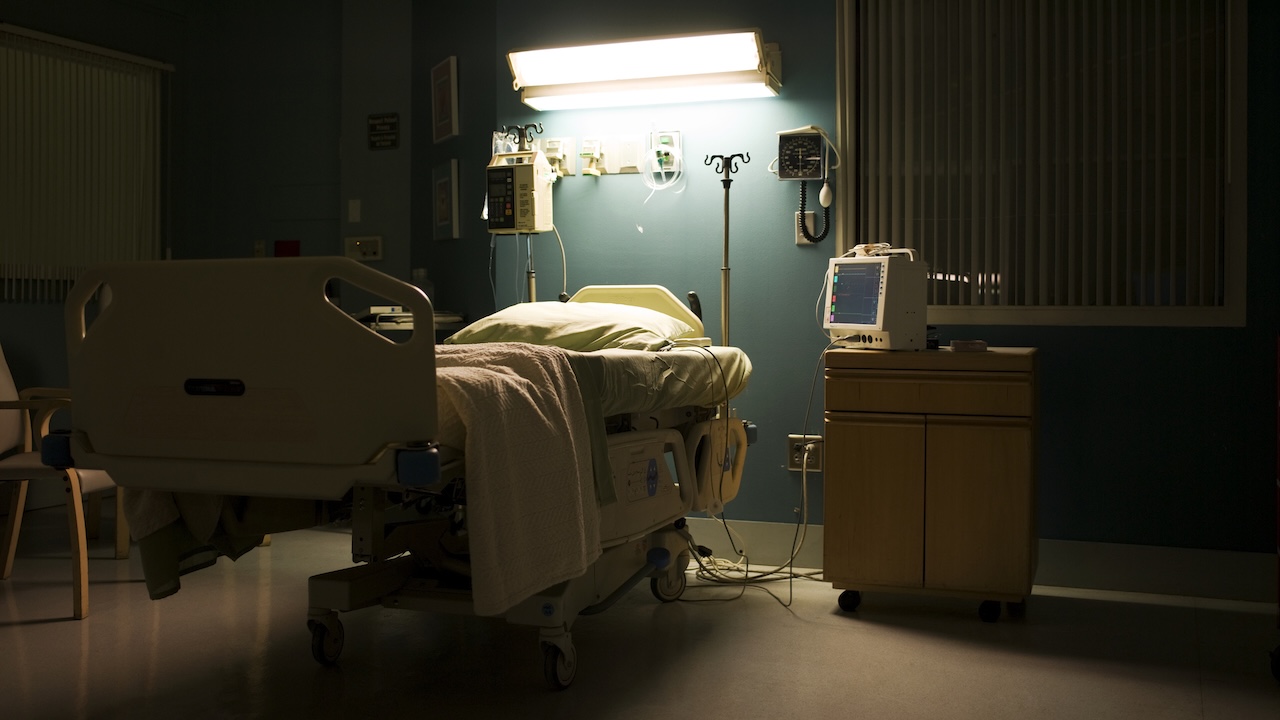
Despite Gov. Gavin Newsom expanding Medi-Cal to record levels, community hospitals across California have been closing pediatric inpatient units, according to a new report from Defend Forgotten America.
Since Newsom took office, total Medi-Cal spending has roughly doubled and is now approaching $200 billion annually. Yet multiple community hospitals have eliminated their inpatient pediatric departments in recent years.
In March 2026 alone, Providence Santa Rosa Memorial Hospital closed its pediatric unit, and UCI Health shut down pediatric services, including its pediatric intensive care unit, at Fountain Valley Regional Hospital. Similar closures occurred at Los Robles Health System in 2025 and Adventist Health White Memorial late last year.
As Medi-Cal covers about half of California’s children, the report argues that these closures are leaving families in several regions without local inpatient care for children. The report was first obtained by the Daily Signal.
“Children’s inpatient care is foundational to a functioning healthcare system. California’s current trajectory reflects a failure of leadership and prioritization. Expanding coverage without ensuring access to care is not a success; it is a systemic failure,” the report states.
“The true measure of healthcare policy is not how many individuals are enrolled in a program, but whether care is available when needed,” the report adds. “Right now, in California, that standard is not being met.”
According to the report, the closures, particularly in Northern and Central California, have created major access problems. Families now face multi-hour ambulance transfers, longer emergency department boarding times, greater concentration of care in overburdened regional children’s hospitals, and reduced surge capacity during respiratory illness seasons.
The report also points to emergency department congestion, noting that children often remain in emergency departments longer while awaiting transfer. This leads to increased clinical risk, higher provider burnout, and reduced emergency capacity for all patients.
“As pediatric units close, specialists relocate to larger systems, leaving entire regions without adequate pediatric expertise,” the report states. “Once these workforce ecosystems collapse, they take years—if not decades—to rebuild.”
But prior to the new reports of the state’s program failing in various ways, Medi-Cal had been under the media spotlight in recent years due to its expansions.
Under Newsom’s Medi-Cal expansion, the program’s growth included full-scope coverage for undocumented immigrants, first for adults ages 19 to 25, then for those over 50 in 2022, and for those ages 26 to 49 by 2024.
The expansions increased the number of Medi-Cal enrollees and shifted more of the financial burden onto the state, as coverage for undocumented immigrants is funded entirely by California. However, the report states that Medi-Cal reimbursement rates for inpatient pediatric care did not keep pace with the growth in enrollment.
Medi-Cal reimbursement rates for hospital services have long been a point of tension in California, with hospitals criticizing them as falling short of the actual cost of providing care. According to the California Hospital Association, Medi-Cal reimburses hospitals roughly 80 cents for every dollar spent on patient care.
“The structural challenge is clear: Policymakers expanded coverage without adequately ensuring the healthcare system could sustainably deliver care,” the report states.
The key failures, according to Defend Forgotten America, include the failure to align pediatric inpatient rates with post-pandemic labor costs, the lack of meaningful pediatric-specific stabilization funding, the absence of a rural pediatric preservation strategy, and the lack of enforceable transparency around pediatric unit closures.
“When state leadership dismisses pediatric closures as ‘local operational decisions,’ it deflects responsibility from the policies that created the crisis,” Defend Forgotten America states. “Hospitals do not set reimbursement policy—the state does.”
The report recommends several steps to address the issue. These include aligning pediatric inpatient reimbursement rates with actual costs, creating a pediatric infrastructure stabilization fund, expanding workforce incentives for rural areas, requiring advance notice and community impact assessments before closures, and conducting a statewide pediatric capacity audit.
Newsom’s office did not respond to the Daily Signal’s request for comment.