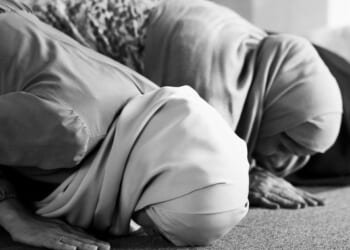
The National Day of Prayer reflects the enduring American tradition of turning to faith by seeking God’s protection and favor on our country, leaders, and communities. As early as 1668, the Virginia House of Burgesses passed an ordinance declaring a day of “Humiliation, Fasting and Prayer, to implore God’s Mercy.”
Days of prayer have evolved since then. Congress passed an annual observance in 1952, and in 1988, established the observance as the first Thursday in May.
Today, navigating religious freedom in the public square can feel far more complicated.
But amid the complexity, there is reason for renewed confidence. At the U.S. Department of Health and Human Services (HHS), two offices are promoting and protecting religious service: the Center for Faith, and the Office for Civil Rights. We work in tandem to promote the power of lived experience through community outreach to faith communities and the protection of conscience and religious freedom in health and human services.
The Bridge: The Power of Lived Experience
Maintaining strong relationships with the faith community is essential to the health and resilience of our families, our neighborhoods, and our nation, and to HHS’ ability to achieve its mission.
Local organizations are the primary “Trusted Messengers” for our most marginalized neighbors—offering a level of trust that federal agencies historically struggle to build alone. Houses of worship offer something no federal agency can manufacture: trust built over years, presence rooted in community, and the ability to respond with compassion and speed.
Every day at the HHS Center for Faith, we encounter community leaders who are the consistent engines of American renewal.
We meet local leaders walking with individuals battling substance use disorder; congregations helping parents reconnect with their families after incarceration; foster families motivated by sincere religious convictions to welcome vulnerable children; and ministries supporting survivors of human trafficking.
Faith leaders do not wait for a federal mandate to act; they go to their houses of worship to strengthen families and help their fellow Americans. Americans seek relief, stability, and dignity—and they often find it first in a house of worship.
The Shield: Protecting the Religious Right to Serve
For faith communities to serve with confidence, they must know their core religious identities are secure. Federal laws protect the exercise of conscience and religion in health and human services. Generally, these laws allow faith-filled Americans and organizations to serve in health and human services fields without coercion and without discrimination, and without having to compromise the faiths that inspire them to serve.
For instance, federal law allows a religious organization that is qualified to deliver substance use prevention and treatment services to apply for federal resources on equal footing with any other nonprofit private provider. If selected, the religious organization retains its religious autonomy, including control over the definition, development, practice, and expression of its religious beliefs.
Any religious organization that has been discriminated against because of its religious character can file a complaint with OCR. Rights on paper only matter if people can assert these rights in practice.
Over the past year and a half, OCR has taken decisive steps to protect conscience and religious rights in health and human services and educate the public about the importance of respecting conscience rights.
We have contributed to eradicating anti-religious bias in health and human service programs. We have enforced civil rights laws at HHS-funded schools when antisemitism disrupted equal access to safe education. We have opened investigations into alleged discrimination against health care workers that may have infringed on their conscience rights. We have launched compliance reviews of states and announced a finding that certain state laws violate federal conscience laws.
A Unified Approach
Regardless of your personal faith background, as we approach the 250th anniversary of our nation’s founding, Americans are invited to remember the prayers of our founders—prayers that called the nation to seek forgiveness, express gratitude, and cultivate the virtues, both public and private, that are necessary for a free and flourishing society.
Our message this National Day of Prayer is clear: we are here to ensure your faith remains a protected, essential, and vibrant part of the American story.
We publish a variety of perspectives. Nothing written here is to be construed as representing the views of The Daily Signal.